
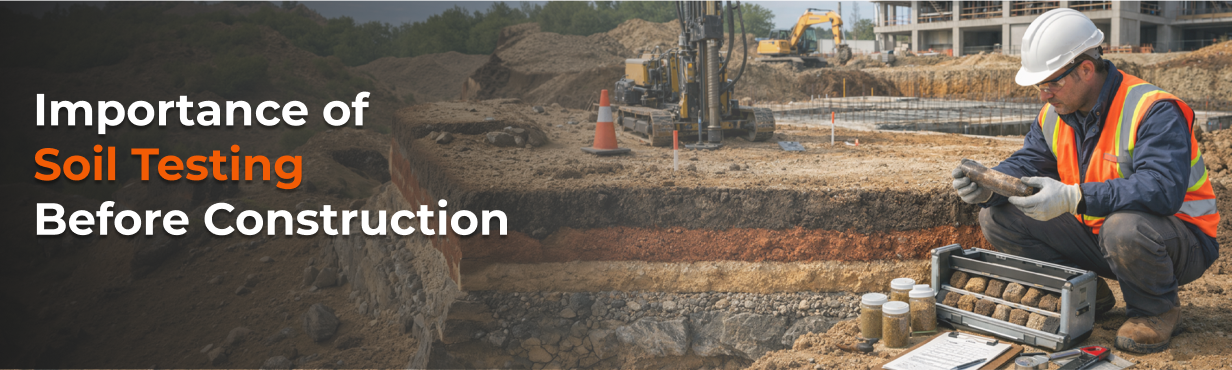
Importance of Soil Testing Before Construction
Soil testing is one of the most important steps before starting any construction project. Many people focus on design, budget, and material, but ignore the condition of the soil. The strength of any building depends not only on cement and steel, but also on the ground below it. If soil is not tested properly, it can lead to cracks, settlement, water problems, weak foundation, and extra construction cost later.
Step-by-Step: Importance of Soil Testing Before Construction
Step 1: Understand the land condition
Before starting construction, first check the site condition. Every plot does not have the same soil type.
- Hard soil
- Soft soil
- Black cotton soil
- Sandy soil
- Filled-up land
- Water-affected soil
This is why soil testing is important before foundation work starts.
Why Soil Testing Is Important
1. It helps to decide the right foundation
Different soil types need different foundation designs.
- Strong soil may support normal foundation
- Weak soil may need deeper or stronger foundation
- Water-affected soil may need special treatment
Without soil testing, foundation design may be risky.
2. It prevents future cracks and settlement
If the soil is weak or loose, the building may settle unevenly. This can cause:
- Wall cracks
- Floor settlement
- Foundation movement
- Structural problems
Soil testing helps reduce these risks.
3. It improves building safety
A building is only as strong as its foundation. If the soil cannot bear the building load properly, safety becomes a major issue.
Soil testing helps ensure that the structure is built on safe ground.
4. It helps estimate bearing capacity
One major purpose of soil testing is to know the safe bearing capacity of the land.
- How much load the soil can carry
- What type of footing is suitable
- How deep the foundation should go
This is very important for safe structural design.
5. It helps identify groundwater level
Soil testing also helps understand:
- Water level below the ground
- Moisture condition
- Water-related construction challenges
If groundwater is high, construction planning must change accordingly.
6. It avoids extra cost later
Many people skip soil testing to save money in the beginning. But later they may face:
- Foundation failure
- Repair cost
- Redesign cost
- Extra excavation
- Waterproofing issues
Soil testing actually helps save money by avoiding future mistakes.
7. It helps in proper material planning
When soil condition is known, engineers can plan:
- Foundation type
- Concrete grade
- Steel requirement
- Depth of excavation
- Soil treatment if needed
This makes the construction process more accurate and efficient.
8. It is important for all types of projects
Soil testing is useful for:
- House construction
- Commercial buildings
- Industrial sheds
- Warehouses
- Boundary walls
- Large renovation projects
It is not only for big buildings. Even small construction projects can face problems if soil condition is poor.
9. It helps in black cotton soil or filled land areas
Some plots have problematic soil like:
- Black cotton soil
- Loose filled soil
- Wet land
- Low-lying land
Such plots need extra attention. Soil testing helps identify whether the land is safe for normal construction or special care is needed.
10. It gives confidence before starting work
When soil is tested properly:
- Planning becomes better
- Design becomes safer
- Budget becomes more accurate
- Construction becomes more reliable
It gives peace of mind to both customer and engineer.
What Happens If Soil Testing Is Not Done?
If soil testing is ignored, problems may happen like:
- Weak foundation
- Structural cracks
- Uneven settlement
- Water seepage issues
- Wrong foundation design
- Increased repair cost
- Unsafe construction
That is why soil testing should never be treated as an optional step.
How ConstructKaro Helps
ConstructKaro helps customers connect with the right construction professionals for every stage of the project.
For soil testing and safe construction planning, ConstructKaro can help customers by:
- Connecting them with relevant experts
- Helping them find the right consultants, surveyors, and construction professionals
- Supporting better project planning before actual work starts
- Helping avoid random decision-making in construction
This makes the project process more organized and professional.
Final Conclusion
Soil testing is an important step before starting construction because it helps understand the strength and condition of the ground. It supports safe foundation design, prevents future structural problems, and saves unnecessary cost later.
Before building on any plot, it is always better to test the soil first and then move forward with design and construction.